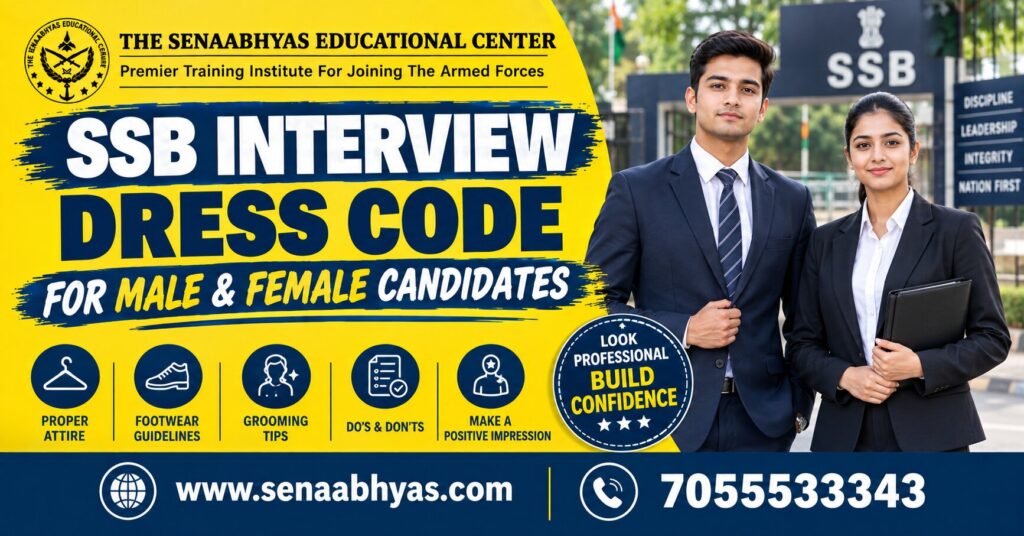
Joining the interview process for SSB is a huge step towards an officer entry career. With all the preparation that goes into screening, psychology, GTO and personal interview, one of the practical concerns that the applicants have is “What should I wear?”
The correct SSB interview dress code is not all about dressing up in fancy clothes and appearing to be an officer before selection. The SSB dress code is all about looking smart, disciplined, confident and well-prepared. The choice of clothes you make must help you to move freely, express yourself and concentrate on the process of selection.
For those who are preparing themselves properly for the SSB, Senaabhyas has a lot to offer. Senaabhyas‘ SSB training covers all aspects of screening test, psychological test, GTO, personal interview and profile based guidance.
Important: The Services Selection Board may issue specific instructions with your call letter or joining instructions. Those instructions should always take priority over general clothing advice. Official UPSC notices also require candidates called for SSB to report as instructed and carry the required original documents.
Dress Smart, Not Overdressed
The simplest rule for an SSB candidate is this: look presentable without looking artificial.
You do not need a designer suit, expensive shoes or a completely new wardrobe. A clean, properly fitted and comfortable outfit creates a much better impression than clothing chosen only to appear fashionable.
Think about your complete five-day experience. You may have to move between different activities, attend formal interactions and participate in outdoor tasks. Your clothing should therefore support your performance.
A practical wardrobe should be:
- Clean and properly ironed
- Comfortable for long hours
- Appropriate for formal interactions
- Suitable for physical activities
- Simple and well coordinated
- In good condition
This approach is useful for both male and female candidates.
SSB Interview Dress Code for Male Candidates
For male aspirants, the safest approach is to carry a combination of formal clothing and comfortable sportswear. You should not depend on a single outfit for the entire selection process.
Formal Outfit for Interview
For the personal interview and other formal occasions, a simple formal combination works well.
A practical choice includes:
- Light-coloured formal shirt
- Dark formal trousers
- Formal belt
- Clean formal shoes
- Matching socks
- Simple wristwatch, if required
A blazer is not automatically necessary. Unless the instructions specifically ask for one, a well-fitted shirt and formal trousers are generally a more practical choice.
Choose clothes that fit your body properly. Extremely tight shirts, oversized trousers or heavily styled outfits can become uncomfortable during a long day.
Shirt Selection
White, light blue, pale grey and other subtle shades are generally safe choices for formal wear. Avoid loud prints, large logos and distracting patterns.
Carry at least two or three formal shirts so that you have a fresh option for different days.
Trousers and Shoes
Choose comfortable formal trousers in neutral shades such as navy, charcoal or black. Your formal shoes should be clean, polished and comfortable enough to wear for several hours.
Do not buy brand-new shoes immediately before reporting. Wearing unfamiliar footwear for long periods can cause discomfort or blisters.
SSB Dress Code for Female Candidates
Female candidates should follow the same basic principle: professional, comfortable and appropriate clothing.
There is no need to copy a stereotypical “officer look.” Your clothing should suit you naturally while remaining suitable for the selection environment.
For formal interactions, candidates can consider:
- Formal shirt with trousers
- Simple formal kurta-trouser combination, where appropriate
- Comfortable formal footwear
- Minimal accessories
- Neat and practical hairstyle
The exact choice should also consider the instructions provided by the respective selection centre.
Keep Accessories Minimal
Large earrings, heavy jewellery, flashy accessories and uncomfortable footwear can become distractions. A simple appearance keeps the attention on your communication and personality.
If you wear spectacles, use the pair you normally use. There is no reason to change your appearance simply for the interview.
Clothing for GTO and Outdoor Tasks
This is where candidates sometimes make a mistake. They prepare a formal outfit but forget that SSB is not only a personal interview.
The GTO environment requires comfortable clothing and footwear because candidates participate in outdoor group activities and physical tasks.
For outdoor activities, consider carrying:
- Comfortable sports T-shirts
- Track pants or sports trousers
- Sports shoes with good grip
- Socks
- A lightweight track jacket, depending on weather
- Extra comfortable clothing
Your sports shoes deserve special attention. Choose footwear that you have already used and know is comfortable.
Do not arrive with completely new shoes expecting them to perform perfectly on the first day.
What Should You Wear for the Personal Interview?
The personal interview is one of the most important formal interactions during the selection process. Your clothes should therefore be clean, properly fitted and appropriate.
A simple formal combination is usually enough.
For male candidates, a light formal shirt with dark trousers and polished formal shoes is a practical choice.
For female candidates, a neat formal outfit that provides comfort and allows natural movement is appropriate.
The goal is not to impress the Interviewing Officer with fashion. Your confidence, honesty, communication and awareness matter much more than the price or brand of your clothes.
SSB Dress Code for Screening Day
The first day can be stressful because candidates are entering a new environment and facing screening tests. Your clothing should therefore be comfortable and practical.
Avoid arriving in extremely casual clothing such as:
- Torn jeans
- Graphic-heavy T-shirts
- Slippers
- Very bright outfits
- Uncomfortable footwear
A clean casual or smart-casual outfit can be suitable when formal clothing is not specifically required.
Keep your appearance neat from the moment you report.
How Many Clothes Should You Carry?
Packing intelligently can make your SSB stay much easier.
Instead of carrying your entire wardrobe, prepare a compact selection based on the expected duration and activities.
A practical packing list may include:
| Clothing Item | Suggested Quantity |
| Formal Shirts | 2–3 |
| Formal Trousers | 2 |
| Sports T-Shirts | 3–4 |
| Track Pants | 2 |
| Sports Shoes | 1 pair |
| Formal Shoes | 1 pair |
| Socks | 4–5 pairs |
| Innerwear | As required |
| Light Jacket/Sweater | 1, depending on weather |
The exact requirement can vary according to the centre, season and instructions received by the candidate.
Grooming Matters as Much as Clothing
Good grooming completes a professional appearance.
For male candidates, keep hair neat and facial hair well maintained according to your normal appearance and applicable instructions. Avoid experimenting with a completely new hairstyle just before reporting.
Female candidates should choose a practical hairstyle that stays neat throughout the day and does not interfere with activities.
Basic grooming should include:
- Clean and trimmed nails
- Fresh and clean clothes
- Neat hair
- Clean shoes
- Good personal hygiene
- Minimal fragrance
You do not need excessive perfume or styling products. Clean and disciplined is better than flashy.
Common Dress Code Mistakes Candidates Should Avoid
Many candidates make simple mistakes because they focus too much on looking impressive.
Avoid:
- Wearing extremely expensive or flashy clothing
- Using strong perfumes
- Wearing uncomfortable new shoes
- Carrying excessive accessories
- Choosing clothes that restrict movement
- Copying someone else’s personal style
- Wearing wrinkled clothing
- Ignoring weather conditions
Your clothing should make your day easier, not harder.
What to Wear According to the Season?
Weather can significantly affect your comfort during SSB.
Summer
Choose lightweight, breathable fabrics and comfortable sportswear. Carry enough changes of clothes because outdoor activities can make you sweat.
Winter
Layering is more practical than wearing one extremely heavy garment. Carry a warm jacket or sweater suitable for the weather at your reporting centre.
Monsoon
Carry an umbrella or rain protection where practical and keep an extra pair of socks. Wet footwear can quickly become uncomfortable.
The key is to prepare for the actual weather at your selection centre rather than blindly following a generic packing list.
Does Dress Code Affect SSB Selection?
This is one of the most important questions candidates ask.
Your clothes do not replace your performance. SSB assesses candidates through a range of activities designed to evaluate their suitability for officer roles. Dressing appropriately can help you appear organised and feel confident, but it cannot compensate for weak performance.
Do not enter the interview thinking, “If I wear the perfect clothes, I will get recommended.”
Instead, focus on:
- Clear communication
- Natural confidence
- Teamwork
- Reasoning ability
- Leadership qualities
- Emotional stability
- Awareness
- Genuine personality
Your appearance should support your confidence, not become the centre of your preparation.
How Senaabhyas Helps You Prepare Beyond Dress Code
A good SSB preparation program should go far beyond telling candidates what clothes to pack.
At Senaabhyas, SSB preparation covers key areas such as screening, psychological assessment, GTO tasks, personal interviews, PIQ analysis and individual feedback. The institute’s team includes experienced defence professionals and retired assessors, including psychologists, GTOs and interviewing officers.
The institute is led by Brigadier Manoj Kumar (Retd.), who has 33 years of Armed Forces service and expertise in SSB, counselling and motivation. Its leadership and faculty structure gives candidates access to guidance focused on the actual demands of defence selection.
This makes the preparation more practical. Instead of simply memorising interview answers, candidates can work on communication, self-awareness, group behaviour and overall personality.
For aspirants looking for SSB coaching Agra, this kind of complete preparation can be more valuable than preparing only for one part of the selection process.
Build Your SSB Wardrobe Before the Reporting Date
Do not wait until the night before reporting to purchase everything.
A better approach is to prepare your clothing several days in advance. Wear your formal shoes once or twice. Check whether your shirts fit comfortably. Try your sportswear before the actual selection process.
This small preparation can prevent unnecessary stress.
Create one separate SSB bag containing your:
- Formal clothing
- Sportswear
- Shoes
- Grooming essentials
- Weather-appropriate clothing
- Required documents and personal items
Also check the call letter and official joining instructions carefully because those instructions take priority over general preparation advice. UPSC’s current examination information continues to direct candidates to official service websites and selection-centre instructions for SSB-related details.
Quick SSB Dress Checklist
Before leaving for the selection centre, ask yourself:
Formal wear
- Is my shirt clean and ironed?
- Are my trousers comfortable?
- Are my shoes polished and broken in?
Sportswear
- Do I have comfortable sports shoes?
- Are my track pants suitable for outdoor activities?
- Do I have enough changes of clothing?
Grooming
- Are my nails clean?
- Is my hairstyle neat?
- Do I have basic grooming items?
Preparation
- Have I checked my call letter?
- Have I arranged the required documents?
- Have I checked the weather?
If the answer is yes, you are already reducing a lot of unnecessary stress.
Conclusion
The appropriate SSB interview dress code is one which includes cleanliness, comfort, professionalism, and practicality. The male candidate must have appropriate dressing that can include both formal as well as sports outfits, whereas the female candidate must opt for neat formal and comfortable sports clothes.
No amount of preparation time should go into stressing about brands, fancy clothes or building an artificial personality like that of an officer. Dressing must only provide you with confidence and comfort as the true task lies in your preparation, behavior, and personality.
For candidates desirous of structured SSB interview preparation, Senaabhyas provides training in areas beyond dress code including Screening, Psychology, GTO, Personal Interview, and Individual Profile.
FAQs
Q.1 What is the best SSB interview dress code for male candidates?
A light formal shirt, dark formal trousers and comfortable polished formal shoes are a practical choice for formal interactions. Carry separate sportswear for GTO and outdoor activities.
Q.2 What should female candidates wear for an SSB interview?
Female candidates should choose neat, comfortable and professional formal clothing. The outfit should allow natural movement and should not be distracting or uncomfortable.
Q.3 Do I need to wear a suit for SSB?
A suit is generally not necessary unless specifically mentioned in your instructions. A well-fitted formal shirt and trousers can be a practical option for male candidates.
Q.4 Should I buy new shoes for SSB?
You can buy suitable shoes if required, but use them beforehand. Completely new footwear may cause discomfort during a physically active selection process.
Q.5 Does dress code affect SSB selection?
Appropriate dressing supports a neat and disciplined appearance, but selection is based on overall performance and assessment across the SSB process, not on expensive or fashionable clothing.
Q.6 What should I carry for SSB GTO tasks?
Carry comfortable sportswear, suitable sports shoes and enough changes of clothing. Always follow the specific instructions provided by your selection centre.
Q.7 Can Senaabhyas help with SSB interview preparation?
Yes. Senaabhyas offers structured SSB preparation covering screening tests, psychological assessments, GTO activities, personal interviews and profile-based guidance.